
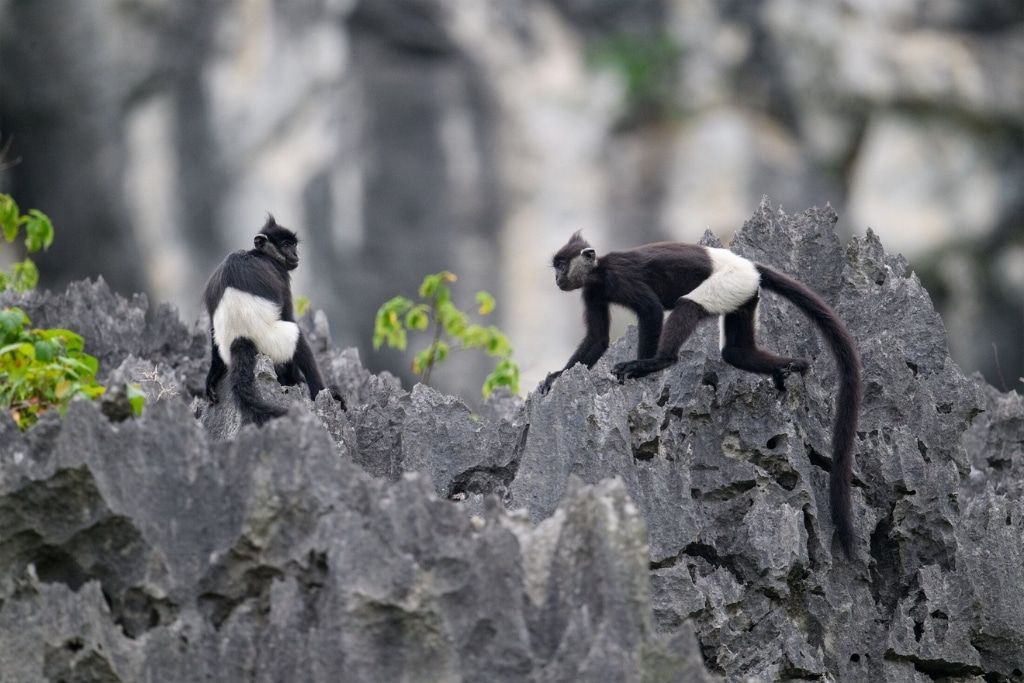
Все, что нужно знать об исчезающем лангуре Делакура
Translating content guidelines
I need to keep the tags as they are in HTML, including the alt text, since the instruction specifies not to translate them. It clearly says, "ne traduisez pas les balises
et leur contenu." So, that means leaving those parts intact. However, I should translate all
text into Russian, along with sections. Latin names should be preserved, and it’s important to make sure the length of the translation matches the original.Translating article sections
I need to keep the headings intact, like
Appearance
, while translating the content. For instance, the term "Delacour’s langur," which is also known as "voọc quần đùi trắng," should be translated accordingly. The instruction is clear: I should avoid adding disclaimers or instructions and just focus on translating the article section by section.
Starting with the original paragraph, "Delacour’s langur" in Russian translates to "лонгур Делакура," or maybe "обезьяна-лонгур Делакура."Translating specific terms
I’ll translate "Delacour’s langur" as "лангур Делакура" to reflect the possessive form. The sentence starts with “Delacour’s langur, named after…”, which I’ll translate to: "Лангур Делакура, названный в честь французско-американского орнитолога Жана Теодоре Делакура, представляет собой вид старого света обезьян, эндемиков известняковых карстовых лесов северного и центрального Вьетнама."
For "Old World monkey," I can use "обезьяны Старого света." As for "limestone karst forests," I’ll go with "карстовые известняковые леса." The placeholder
—
will remain unchanged.